This is a selected set of projects in my research and practice. Also, check out my Curriculum Vitae for a fuller outline of my scholarship, teaching, and work.
Choice With(out) Equity During Pandemic
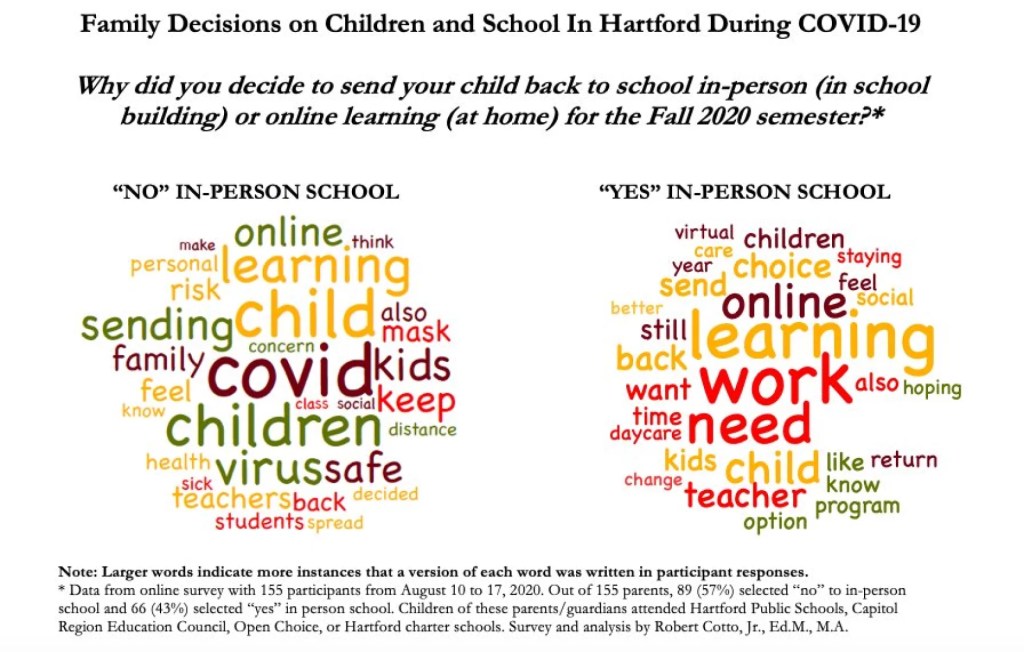
This project examined how families made decisions on returning to in-person schooling during the SARS COVID-19 pandemic. The article and various media discussions came from a survey of 155 families with 88% of respondents identifying as female. The mixed methods analysis examined descriptive statistics and qualitative explanations of family school choice of in-person learning or not. The final peer-reviewed article was titled, “Choice With(out) Equity? Family Decisions on Return to Urban Schools During COVID-19” in the Journal of Family Diversity in Education (Cotto & Woulfin, S., 2021). This project built on past research, including Choice Watch, that identified issues of demographic selectivity among various types of school choice programs such as charter, magnet, and technical schools.
Racial Equity in Early College Experiences
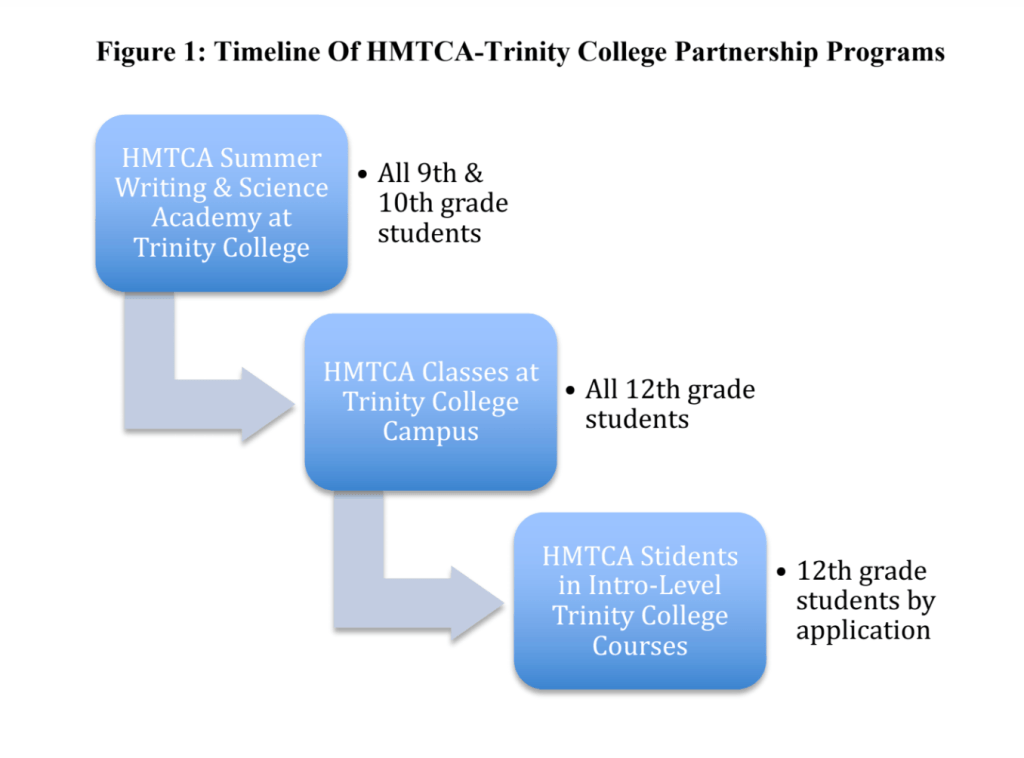
From 2014-2022, I led the early college program partnership with the Hartford Magnet Trinity College Academy (HMTCA) at Trinity College. The partnership between HMTCA and Trinity began in 2011 through an agreement between both organizations. As the first Director of Urban Educational Initiatives (later Director, HMTCA Partnership), I managed day-to-day aspects of the early college program. This included preparation for HMTCA student registration for courses at Trinity College, collaborative planning for the summer school programs along with colleagues, and internal program evaluation. In 2018, I led an internal evaluation of the program through survey and focus groups. This evaluation led to a proposal and new agreement in 2019. This new agreement emphasized racial equity, multicultural and multilingual education, as well as greater connection between organizations.
Histories of Black and Latinx Challenges to Inequality
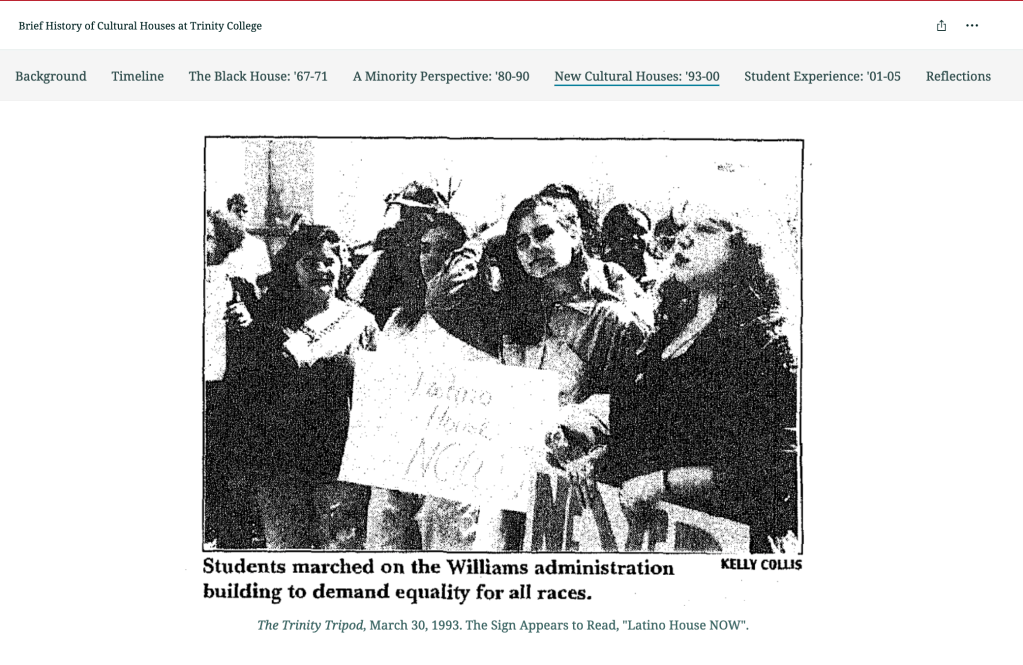
In my scholarship, I study history to better understand how and why everyday people have challenged unequal policy and practices that resonate today. This approach builds on my decade of teaching history and social studies at the secondary level, as well as college-level courses on teaching and learning and the history of testing. Building on this experience, I have researched and written about how communities responded to education and urban policy issues from the early 20th century Americanization and efficiency efforts, the long Civil Rights era, and more recent political and economic challenges. Over the last few years, I have presented at the History of Education Society Annual Conference (2017), co-written a book review (2017) in the History of Education Quarterly, and co-written a brief public history (2023) of Black, Latinx, and Asian American cultural houses at Trinity College in Hartford, CT. I have also shared autobiographical and public history background for local media on issues such as redlining and desegregation. Looking forward, I am redesigning a course on Latinx Urban Activism Since 1900 in the Urban Studies major (cross-listed in History). I am also preparing written work including parts of my dissertation that examined the history of school closures in cities.
Addition Through Subtraction: Thinking Beyond High-Stakes Accountability
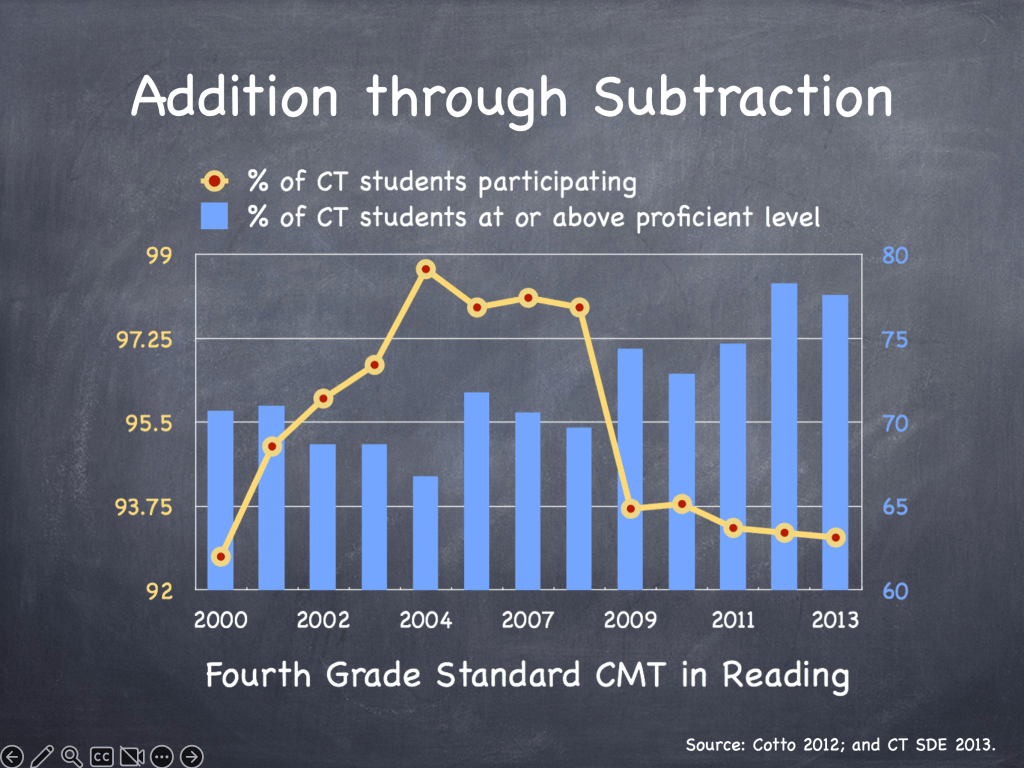
Even before the No Child Left Behind Act, assessing academic progress in classrooms, schools, and districts has been debated. Much of my earlier scholarship viewed how various forms of testing were being interpreted and implemented. In Connecticut, a key issue was the way how changes in participation of students with disabilities on traditional or modified assessments distorted conclusions about progress in education that connected to the push of neoliberal, market-based reforms such as choice, privatization, and high-stakes accountability. In my TedxCCSU talk, I saw it as “addition through subtraction.” The research resulted in a public report of the same name and an article in the Teachers College Record.
 Robert Cotto Jr.